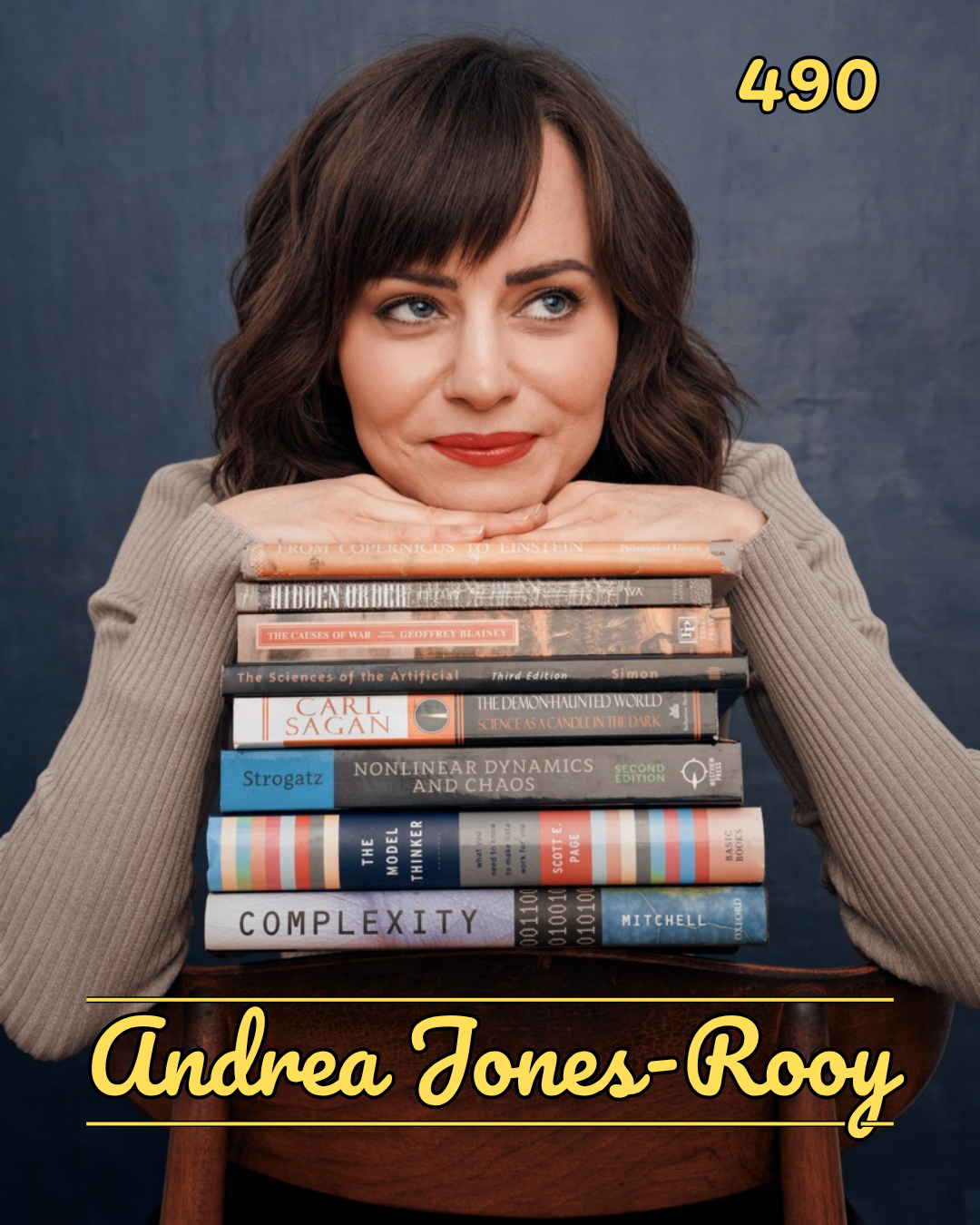
Editor’s note: This 20 Questions started out in March 2025. It did not end until last week. It was a very long process, because it is a very long process. Andrea is crazy busy… during this time she travelled to China, she posted a video every day for 100 days… AND did a podcast season and guest on podcasts, and and and… The interesting thing about this conversation is just how introspective she was willing to be and how raw some of her answers were. This interview was truly a gift.
This week, I have the privilege of asking Andrea Jones-Rooy 20 Questions. I became aware of Andrea after an appearance of hers on The Daily Tech News Show (DTNS) a few years ago... Andrea is a data scientist with a background in stand-up comedy and other performing arts. A good primer on her point of view is her podcast "Behind the Data." Give it a listen and you're welcome. I have always found Andrea's conversations and podcasts/podcast appearances to be impactful and educational. It is always delightful to listen to someone talk about data intelligently. Since my MA from years and years and years ago is in Analytical Geography/Geographic Information Sciences/Spatial Analysis Methods, I have always been interested in how data is portrayed and visualized. So, Andrea's conversations about data are always fascinating to me. That being said... I really don't know much about her. Let's change that. Onto the questions!
As mentioned above, I have a background in geography, so the idea of a person's geographic story is extremely interesting to me. For example, my geographic story goes thus... I was born in Oklahoma City, Oklahoma, and the family moved to Montgomery, Alabama due to my dad's Air Force deployment when I was 3. We moved to just outside of Birmingham, Alabama when I was 4, where I lived until I left for college. I went to college in Kent, Ohio where I followed my now ex-wife down to the Columbus, Ohio area. I have now been living in the Columbus area for almost 30 years now. So, Question 1: What is your geographic story?
My geographic story is ... I was born in LA, which always makes me feel cool to say. Much less cool is that we moved to Frederick, a then-sleepy town in western Maryland, when I was 6 years old, so I am much more cow country than big city, alas, in my background. I hated being in a small town and couldn't wait to leave. I went to college in Connecticut (Connecticut College, which very few people have heard of) mainly because I wanted a dance program (which they have) and a ton of study abroad opportunities (which they also have) because all I wanted was to get as far away from "Fredneck" as it was called as possible. I decided to study Chinese (Mandarin) because it felt like the farthest thing from anything I'd ever known in my small, conservative hometown.
I hated college, but it did get me overseas a bunch -- I went to China three times, including a language exchange, a dance exchange, and study abroad, and I did an internship in Bolivia one summer, and I traveled through South Africa, Botswana, Zambia, and Zimbabwe with some friends who were studying abroad in Cape Town. I realize this all sounds VERY privileged and fancy, and much of it was, but I was very lucky to get a generous scholarship to college, and then the school really paid for the vast majority of all of that. So, while I didn't care for campus life, I really loved the gift of travel that it gave me. I also had a Macedonian boyfriend at the time who studied abroad in Germany, so I'd take these very sketchy standby flights via Iceland to get to Europe and pal around with him for like $200 each way (not a small amount, but not the usual prices). Sometimes I had to sleep on the floor in the Frankfurt airport for days at a time to get a flight, but it was a real steal. (And this was even post 9-11!)
During my internship in Bolivia (La Paz, gorgeous city) I worked in an office of a microfinance institution dedicated to providing small loans and education to women in El Alto, the neighboring city. Most of my work was in the field, visiting sites where women were getting, e.g., prenatal healthcare for the first time and talking about how to launch their own businesses. It was all super interesting. About twice per week I had to be in the office in La Paz and I hated it *so* much that I swore I'd never get an office job. I mean, if you hate an office job that's in a wildly fascinating faraway place and where you're doing genuinely interesting work -- and you STILL feel sick walking into the office -- you know it's not for you.
So, I did what any lost liberal arts major in the early 2000s would do: I went to grad school! I went to the University of Michigan, Ann Arbor, for a Ph.D. in political science. I didn't know what political science was OR what one did with a Ph.D., but I was lucky to get some strong recommendation letters that snuck me into this program that I definitely had no business being a part of. I also was intending to apply for a master's first, but an advisor told me that if I got into a Ph.D. program, I could leave after the master's and then not be in debt (Ph.D.s are generally paid for in that field, and comes with a very modest living stipend -- I think mine was $14k for the first year for all expenses -- rent, food, etc. Better than nothing, but definitely lean times).
ANYWAY -- I hated grad school (notice a theme?) haha. But again I got some nice grants to travel -- Budapest, Shanghai, Tokyo -- really wonderful opportunities. Grad school was surprisingly math-heavy, which I had not anticipated. It turns out political science is, like, statistics and game theory more than sweeping essays about the Nature of War. After a few years of really resisting the math side of things, I saw the light and got pretty into it. But, dissertation work was lonely and hard, and I had a lot of untreated mental illness and undiagnosed ADHD so I was pretty useless and depressed for YEARS.
The only thing that kept me going was I found comedy (improv) in NYC and circus (trapeze, silks, aerial hoop) in Detroit, and I would dash between Ann Arbor, MI and those two cities for activities that would replenish my spirit. I eventually finished my damn degree (it really and truly almost killed me), and got a post-doc position (basically, junior faculty role for less pay) at Carnegie Mellon in Pittsburgh.
I hated it (yay, theme). There was no comedy or circus at the time there (I tried gymnastics and ballet but it wasn't the same). I would keep ditching Pittsburgh to dash back to Detroit or NYC for my artistic fixes. I eventually got a real faculty job, though -- at NYU Shanghai, of all places. (My dream was to work at NYU, but they weren't hiring, but their new campus in Shanghai was, and my dissertation was on censorship in Chinese media, so it made sense.)
I moved to Shanghai in 2013 to (a) test out whether I really wanted to be a professor, (b) make some money because I was flat broke and this was finally a real job, plus they provided housing for international faculty, which was a huge deal, and (c) to finally once and for all leave behind comedy + circus and GET SERIOUS. For (c), I figured that sort of silly thing didn't exist in China for random 30 year old Americans.
I was wrong! Shanghai at the time I was there (2013-16) was bursting with cultural opportunities and change -- there were many spaces where international and local artists would come together, whether over music, standup, improv, dance, acrobatics, and more -- it was a magical time. It's a long story, but I ended up getting into an improv group where we performed weekly and also traveled to Hong Kong, Tokyo, Kyoto, and Beijing for comedy festivals), I started doing standup, which I'd always wanted to do but had been too afraid of, and most importantly I got hired to be a performer at a circus-themed nightclub in Shanghai called Cirque le Soir.
My life as a nightclub circus performer in one of the biggest cities in the world (depending on how you measure it either Tokyo or Shanghai are the most populous cities) was so wildly different from anything I'd ever done before. I was up late, wearing amazing makeup and costumes, performing trapeze in front of high powered audiences, and getting to really be myself. It was collaborative, fun, interactive, and such an incredible view into the local culture -- that I could not get from my desk at NYU Shanghai. I felt rehabilitated after turning into a shadow of myself during graduate school and completely losing sense of my personality and any sense of self worth from just perpetually feeling stupid, slow, and bad.
ANYWAY, this wasn't supposed to be such a long answer. I'll speed up. By 2016 Cirque had closed and NYUSH was growing to a point where it started to feel like a regular, boring university instead of the cool startup it was when I first got there, and I was more and more excited about standup, which had a nice scene there, but if I wanted to get to the next level I felt I needed to be in NYC. Plus I'd always wanted to live in NYC and never did it, and I was 30 goddamn 4 years old!
I decided living on the opposite side of the world from what I wanted for a career I was fairly iffy about wasn't a great way to live. So, despite all the gifts Shanghai had given me, I made the decision to move back to the US in 2016. And made the even harder decision to leave my tenure-track academic job, which was a very big deal to get, and an even bigger deal to walk away from.
I've been in NYC ever since!
WHEW.
Wow... I think you might have the most varied geographic story I have ever seen. Truly, it is very comprehensive. Living in North America, South America, Africa, Europe, and Asia are represented. You need to spend a summer in Australia and then a 6 month stint at McMurdo Station in Antarctica and collect all 7. Seriously, that is really amazing.
Question 2: You have lived in tons of places, and visited even more, is there a place you want to live that you haven't? Or is there a place that you have lived that you would like to get back to in a semi-permanent manner?
Part of me would love to live in Shanghai again, but the city has changed a lot since I was there and I suspect it's not the same. I think what I'm yearning for is the feeling of possibility and excitement and liberation (of all things to feel in China, haha) that I experienced there, more so than the place itself. Though it is a beautiful, incredible city (or at least it was, I don't know now).
Otherwise, honestly I know you mentioned it in your answer but I would love to live somewhere totally extreme like, no joke, Antarctica or the tip top of Canada. I'd say Greenland but at this point I would feel like an invader, haha.
Yeah, you might be right about wanting to go back to a time in life rather than a place. I have a few "when's" I would love to visit for a short time, but I really dig who I am right now, so going back would only be for a visit
Okay here we are at the question everybody has been waiting for... Question 3: cake or pie? Which specific kind and why?
Oh, that's a good distinction -- when vs. where! Have you seen the show Dark? Reminds me of that :).
Haha and perfect finally a serious question!! CAKE FOREVER. White cake with white frosting. Fairly dense as opposed to airy. The best version I've had is from this bakery. The reason that cake > pie: the texture of cake is so exciting and the overall presentation is so festive in a way that pie could never be (don't worry, I love pie, I just LOVE CAKE haha).
The main reason for the white cake: I've also been obsessed with white cake with white frosting since I read Harriet the Spy when I was a kid (I read it like 200 times) -- she used to have that kind of cake as an after school snack and every time I read that section I'd think about how great that sounded (as I chewed on my fig newtons or whatever).
The additional reasons for white cake: I am vegan and dabble in gluten free just to annoy everyone and darker colored vegan cake is pretty doable with ingredients that are darker (flax instead of eggs, non-refined therefore darker sugar, etc) -- so vegan chocolate cake is pretty easy to do, and it's easy-ish to find. Carrot cake is easy to veganize (but who wants cake with vegetables), and even yellow/vanilla is pretty doable (though harder to find). So white vegan, GF cake is the holy grail of cakes for me. Also chocolate triggers migraines for me so I can't eat those any more. Haha, basically I'm slowly ruling out all nice things anyone might eat.
I don't think I have ever had someone so wholly and completely choose cake for such a great reason. Most of the people who choose cake do so as a vehicle for consuming frosting. I have the gluten intolerance so my wife found an amazing GF cake that's base is soaked and blended quinoa... best chocolate cake I have ever had, gluten free or not. It does make a fairly dense and moist cake. Light and fluffy/airy GF baking is a rough one. I miss yeasted doughnuts, Anywho... she used the same base to create a GF spice cake with cream cheese frosting... so amazing. I imagine that there could be a yellow cake variety using almond flour, but I don't think there would be a way to make it truly a "white" cake. Vanilla cake? Sure. Truly a "white" cake? Probably not.
My mother used to bake and decorate cakes as a side hustle when I was a kid. So, frosting is a delight for me. I grew up with frosting constantly being in the fridge to add to almost any dessert. If choosing between cake and pie I typically would select pie and put frosting on it.
Question 4: So the chocolate causing migraines thing, is that an issue just with chocolate, or is that something to do with caffeine? Asking as someone who was allergic to chocolate when I was a young kid and had to suffice with carob (ugh, carob… IYKYK) until I grew out of the allergy.
Aw, your story of your mother making & decorating cakes is so lovely! I rarely hear of people who specifically love frosting haha -- what kind of pie do you put it on? I could see, like, vanilla frosting being good on pumpkin or pecan pie, but maybe I'm not being imaginative enough! I also am woefully under-informed about pie in general -- key lime pie, for instance, is a complete mystery to me! haha.
OMG carob is SO AWFUL! My mother tried to get us to eat carob when I was growing up and even she had to admit it was terrible. About a year ago I tried it again due to said migraines and was like surely they've improved carob since the late 90s. They have not. Is there anyone eating it? Someone must be because they're still making it. I really like to think I'm pretty open with most foods but carob is truly difficult for me to deal with, hahaha. Honestly, I sort of feel bad for it -- we keep pressuring carob to be something else (chocolate) ... maybe we should just let it be what it truly is and figure out how to prepare it in a way that doesn't insult everyone.
ANYWAY -- I think it's the chocolate itself that is the trigger, but I might be just telling myself that because I am addicted to caffeine and I love it so very much. I have coffee every day and it's the only thing I have left to look forward to in life so I literally mentally cannot handle it if it's the caffeine causing the problems. Well done growing out of the allergy! I feel like I get less tolerant of chocolate by the day -- literally the other day my boyfriend ordered some cookies that had the world's smallest chocolate chips in them and I thought for sure it would be a small enough amount that it wouldn't bother me. I was wrong.
I do also think sugar is a migraine trigger for me as well. I'm telling you, I can't eat anything because of this! hahah. (Please don't make me give up caffeine, oh god I probably have to.)
Okay, really quickly. I think cream cheese frosting could be a strong pairing for most pies, especially fruit pies. Honestly, now that I really think about it, cream cheese frosting can step up almost every dessert out there.
Anyway... key lime pie is more of a fruit tart than an actual pie. I think its typical shape and presentation makes people refer to it more as a pie, but I digress.
It truly is nice to interact with someone else who understands the disappointment that is carob. It is always welcome to know I am not alone.
Okay, so more of a question out of left field... Question 5: When the meteorologist says, "there is a 40% chance of rain," do they mean that the ratio of rain occurring to no rain occurring is 2:5 or that there is a 100% chance of rain for 40% of the area?
My initial reaction was that the answer seems so obvious to me to be the first interpretation that there must be some trick to your question, haha. So you led me down a small rabbit hole of weather discussions online, and it's kind of a mess out there! For every article stating it was the former, there was another saying it was the latter.
But I am most persuaded by the sources like this one that specified that when meteorologists say there is a 40% chance of rain, they are actually reporting on the results of a calculation of the probability of precipitation (PoP) multiplied by the percentage of the area likely to experience rain, or PoP x % area coverage.
I think usually when I interpret the meteorologist forecast, I actually am assuming they are telling me the probability of precipitation, but actually it looks like they're telling me the probability of precipitation in a specific area over a specific time frame. So, a 40% chance of rain means that there is a 40 percent chance of rain in a given forecast area over a specific time (the next hour, tomorrow, etc).
So, among the options you gave, the first one is closer, but really my answer is neither ... or, kind of both. haha. Because you could get to a "40% chance of rain" if the meteorologist is 100 percent certain there will be precipitation, but anticipates it over 40% of the forecast area. Or, it could be they are 60 percent confident over 2/3 of the area. And so on.
Fascinating! Thanks for the education :).
Also I might be totally wrong and have overthought this. We can always go back to talking about carob hahaha (it still sucks!!).
Boy howdy, Carob sucks.
I also wonder about this when dealing with medical efficacy measures. Is it better to report that a medicine has measurable efficacy in 25% of the study or that the medicine was 100% effective in 5% of the study pop. That being said...I think the % chance of rain calculations for meteorology were more understandably simpler back when meteorology was less specific than it is currently. I am about to step out on a limb here and talk “data science” with a data scientist for concepts I haven't truly played with since I was in grad school the first time (late participants 1900's, because I'm old). Please treat me gently for the things I am undoubtedly going to get wrong... I do wonder if it would be better to elevate the meteorological conversation to a statistical probabilistic surface, a la kriging, of the level of uncertainty for the % chance of an occurrence. I think when we treat the public like they don't understand something, they tend to validate those thoughts. I also wonder if some kind of spatial fuzzy math system could be a better representation because of presenting the potentiality of something in a series of hedges (definitely, likely, kinda likely, less likely, maybe, less unlikely, kinda unlikely, unlikely, nope), but I do this because I always wonder if fuzzy math could be used since bivariate stats, to me, are inherently flawed.
Question 6: Where do you feel the general populace's level of data understanding tends to exist? Where do you feel data conversations tend to leave people lost?
Oh man this is a mega wonderful question and is maybe at the core of my VERY BEING!
Of course there's a ton of variation on this, but extremely generally speaking, I think most people without (much) formal training in data or statistics -- or who haven't interacted with data training recently -- tend to overly focus on specific numbers rather than broader trends or the actual context or validity of the number. As in, we get very sucked into conversations about whether a number is 2.66 or 2.67 and we lose sight of whether that number is meaningfully different from, say, the same value in a previous time period or whether we are even capturing the thing we are trying to understand in the first place.
For example, most large companies run engagement surveys. Sometimes they ask me to come in and help them analyze them -- usually I find that when we present results even to the top level leaders, they get all wound up about ohhhh it's 5.6, how do you know it's not 5.5? Or 5.7? And is it statistically significant?
When what they really should be asking is:
- Is this value meaningfully different from other times we've conducted similar surveys? Why or why not? How might we probe which of our plausible explanations are likely correct?
- Is this value a number that I, as a leader of a company, am happy with? (Statistical significance tends to be less interesting to me, I recommend substantive significance)
- Do I really think I'm measuring "engagement" at my company? Why or why not?
Usually I like to think of a dataset as the starting point for future questions -- data offers hints about what's going on and is an invitation to probe further into something we care about. Too many people think of data as the ANSWER or the final stage of an inquiry -- WELP, it's 5.6, that is the Cold Hard Truth and there's nothing to be done other than stick of whatever conclusion I feel like drawing from that.
Does that make sense? Basically, data is informative, but it's the beginning of a conversation, not the end. And far too often in addition to getting hung up on the precision of the numbers (as opposed to the validity or substantive meaning) we also tend to assume that the first explanation we think of to make sense of a trend must be the correct one.
Another example: We might see in the above company that engagement went up. The temptation might be to conclude: "it's because our employees are happier". But before we can conclude that we better check other explanations -- maybe the less engaged people left? Or they stopped filling out the survey because they don't ever see any changes as a result of it? Or they don't trust that it's anonymous so they are giving inflated answers? What else?
That's kind of a rambling answer but I think it boils down to: too many in the general populace get obsessed with the number itself rather than the context, the substantive meaning, or the validity of the number, and too many people think of data as the answer as opposed to a prompt for further study.
A big part of the data conundrum you are pointing at is the lack of understanding between accuracy and precision. In college for my Mathematical Modeling class (who has 2 thumbs and is a big old nerd? This guy), my professor...
tangent time: this prof was awesome. A Cambridge educated gentleman from India who had the most erudite honeyed English accent started out the class. For 3 weeks we focused on how to model algae blooms and clouds of pollution slowly moving through bodies of water until he had a pretty severe heart attack and had to take a sabbatical. He was replaced by what can only be described as a Russian troll of a man who had limited English and only showed us how to model distribution models involving getting bottles of vodka to all the bars in a city. I got extra credit one day when the Russian C hirt of a man came up to me outside the math building asking "flame?Flame?" So I could give him a light for the most pungent cigarettes I have ever had the displeasure to smell.
Anywhoozlebee... My professor constantly had the refrain of "it is better to have a correct answer to a general question than it is to have an incorrect answer to a precise one." I have sung the praises of accuracy over precision ever since then.... which is basically the whole point of significant digits.
Question 7: Is there an easy resource (book, video, your podcast, etc...) that you recommend to help people get a better understanding that numbers are not necessarily the end all be all and that we should question what we see and the assumptions generated by how we see it? (For me it was "How to Lie with Maps" by Mark Monmonier, but spatial stats was my thing.)
your Question 7 sent me into a small existential crisis… I can even say that after many years of lamenting that there is no book out there that actually directly teaches people how to do this, I'm trying to write one! It's been really difficult to do because my default mode is to sound lecture-y and I've been told people like stories. So, the delay is me trying to write engagingly, haha.
In the meantime we can also offer people the other two things I mentioned: my textbook (https://ajr348.github.io/ds4e_course/) and this amazing book that no one knows about: https://www.sas.rochester.edu/psc/clarke/214/LaveMarch.pdf . Those two things combined get you pretty far!
I would read a data science book you would write… You are going to make me read “How Customers Behave: Turning Marketing Complexity Into Strategic Advantage” now, aren’t you?
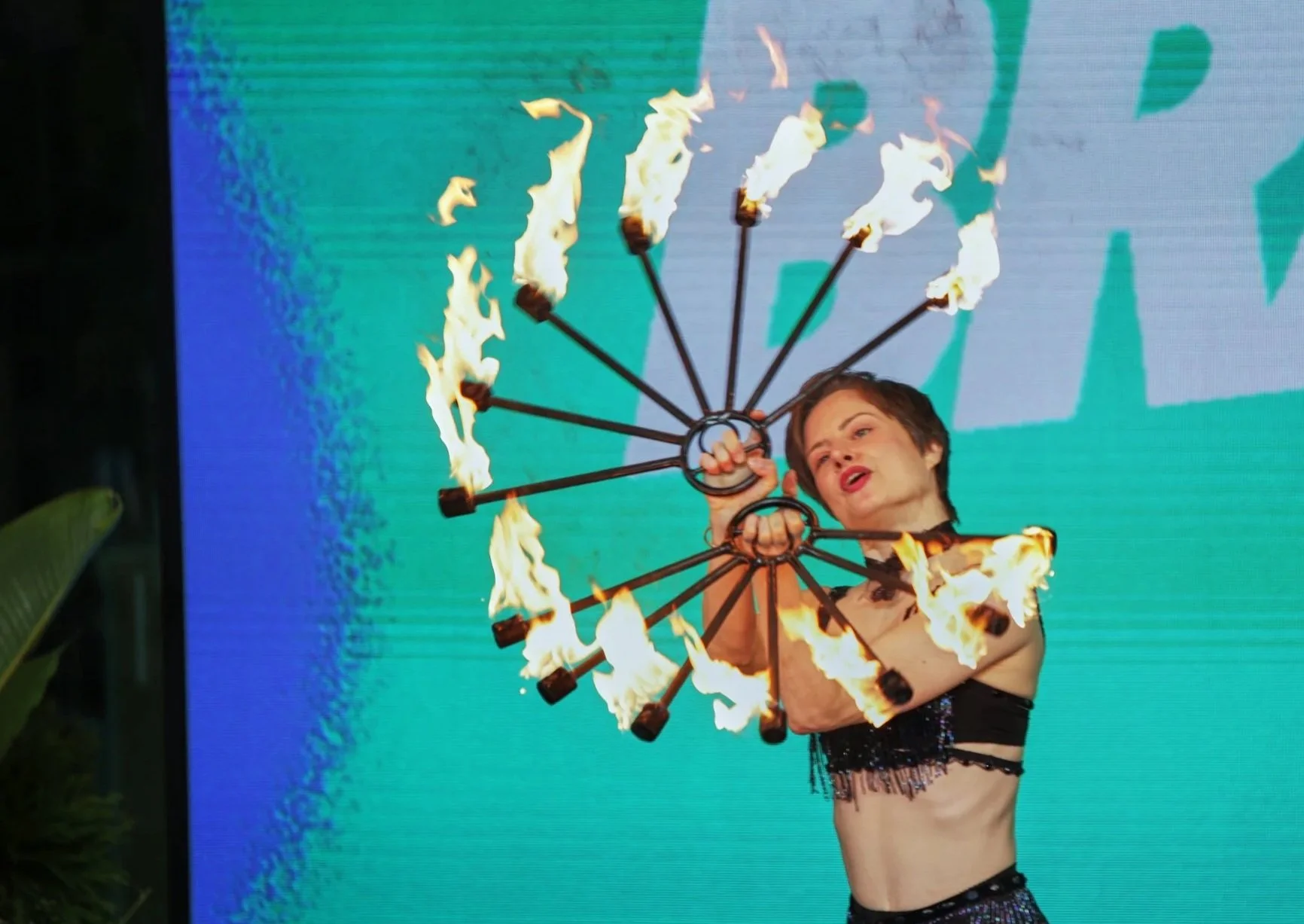
Ok, easy question coming up… kidding, this one is super self-introspective, you are a true renaissance person. You are a stand-up, you have pics of fire eating, you are an aerialist, podcaster, author, professor, consultant, (and I am sure a myriad of other titles) Question 8: When you think of yourself, do you think of a title, or does context always matter when you are self reflecting?
Wow, these questions really are sending me on some soul-searching journeys! I love it. (Truly, don't let my slow replies suggest otherwise -- these are great questions and I'm honored to be part of this! I just suck at life/time/email/all the things).
I will actively pay you $20 to NOT read that “Customers” book hahahah, good gracious I forgot about that!
Here's my (probably not so satisfying?) answer to question 8 -- I think I have spent way too long trying to decide which of the many things you listed that I actually am. I've truly spent way too many self-centered years hand-wringing because I felt like I needed to pick just one. I only recently have come to slowly, tentatively accept that it's ok (maybe even good?) to have more than one thing that I genuinely care about and am dedicated to. All of that said, I think if I were to REALLY flatter myself, if I'm feeling unusually upbeat (rare) I think of myself as at least aspiring to be a kind of combination of Stephen Colbert + Carl Sagan + Taylor Swift, but for data and social science. I would never usually admit such a thing, but you've created a fine circle of trust here :).
All of that said, thanks to mental health goings on, I would also add that most days when I think of myself I think of myself as a failure who is lazy. Ah! Wow, what a rollercoaster this reply has been.
I love this answer, I love the rawness of it and the realness of it. I definitely think you are the true heptalogical threat I outline in Question 8 in a manner that "performer" doesn't quite cover. Truly though, I am not sure I can honor your answer adequately on this 2-bit, silly, one-horse, no traffic signal, 20 Questions blog. Honestly, I am a bit humbled by your label of this conversation as a "circle of trust," and even more so humbled by your responses. You are a goddamned delight.
I think you can be all those things (well not the lazy failure one), sometimes simultaneously, and sometimes concurrently. One good share deserves another.. I consider myself an artist, a storyteller, a writer, a blogger, a user experience designer, a geographer. Sometimes these are isolated individually, sometimes they are in the same constellation. In many ways they are often compartmentalized and those identities are only broken out when that part of me is actuated.
My imposter syndrome kicks in all the time. I am not that great of an artist, I "no longer" "do" geography," I'm an unemployed user experience designer, in many ways I also feel like a failure due to my laziness... and in some ways that is not untrue.
That being said, if you felt Q8 was introspective there are some doozies coming... Question 9: Fill in the blanks: I find that I am mostly ______, but I find that others feel I am mostly ______. (feel free to ask others to fill in that second blank, but you do not have to).
What I want to say is: I find that I am mostly in a state of complete chaos, but I find that others feel I am mostly annoying and unreliable.
But really that answer is "I feel" or "I fear" that others feel I am ....
I asked my boyfriend to fill in the blank and he thought I was asking about him, so I got his answer, haha.
I think if I stop being hand-wringing and weird about it I could say: I find that I am mostly either trying to do too many things at once or in a state of complete shutdown and doing nothing, but I find that others feel I am mostly capable of interesting things if only I could focus.
How's that? Welcome back to the dark inner workings of my psyche, haha!
I would say that "mostly in a state of chaos" and "annoying and unreliable" feel like the same side of a coin, just from a slightly different perspective. That is actually atypical for when people have answered this question in the past. In my anecdotal dataset, it seems that most of these answers follow the path of "I find that I am introverted while others feel that I am extroverted" or some dichotomous relationship like that. The fact that your responses are so cleanly related is really impressive. By having your responses to those 2 blanks be so closely related, it implies a certain level of mental and personality integration. The direction with which they are correlated is... well, it feels really negative to an impartial outside observer.
Full disclosure, I would not have specifically asked you to do these 20 questions with me if I were not impressed by you and genuinely interested in getting to know you better (that being said, if anyone wants to do a 20 Questions with me, hit me up. Everyone is interesting and has 20 questions in them to answer).
I truly hope that you do not feel that I feel this way about you. You are an incredibly busy person (remember that you are a heptalogical threat and all that).
As to your non-"hand-wringing and weird" answer to this question. Again, these are very similar to each other. You at least feel you are presenting what others are perceiving. That is pretty good integration. It might be incorrect integration, but that is a topic for another day.
Self image is very important. Question 10: What are 3 things you truly love about yourself?
Haha, you are literally the nicest person in the world, and I honestly cannot overstate how much your kindness and encouragement and thoughtfulness mean to me. Heptalogical threat is also my new favorite phrase, thank you for the gift of that phrase, and the reminder of it! I might have to paint it in big letters on my wall for self-esteem purposes :).
I also am so amused by your assessment of my integration -- I love that I am both integrated and incorrect, haha. It's like a medical test that's consistently wrong, but, hey, it's consistent :). Amazing.
Ok, heavens, 3 things I truly love?! This might be the hardest question yet. I feel weird saying anything positive about myself but here's what I've got for ya:
1. My brain is super quick -- I am at my very best when I'm being spontaneous, especially on stage, and I am lightning fast at coming up with fun replies on the spot to things people say. I love things like improv and crowd work in standup for that reason. My more academic lectures are also for sure the best when I have some audience interaction or spontaneity in them.
2. I can focus for EVER once I get started on a task -- it's hard for me to get going on projects, but once I'm in the zone I can literally stay up all night. It's extremely fun and exhilarating and I so much prefer that to boring "do a little each day" kinds of things.
3. I am up for trying anything once (or more than once). An undergraduate professor once described me as "almost fearless" and I hope I live up to that. I don't understand when people refuse to try random things just because they're new or they fear not being good at it. I'm pretty open to even trying things I suspect I'll hate (except golf, I won't do it).
Many people have a hard time coming up with things to say that are nice about themselves. You did well with that. You do seem to have quite the facile brain, and I can't help but think you are relatively fearless. One cannot be overly fearful and be a fire eater.
Okay, a lighter subject. Question 11: If you could have dinner with any 5 people (historical, alive or dead, personal, public figures, etc...), what would you serve for the dinner? I mean, this is a big dinner.
Haha! it's true, eating fire does require a bit of fearlessness ... and also foolishness ;).
OOOOH this question has a twist! I would serve my mother's vegan spanakopita. It's DYNAMITE. I'll make 2 if needed!
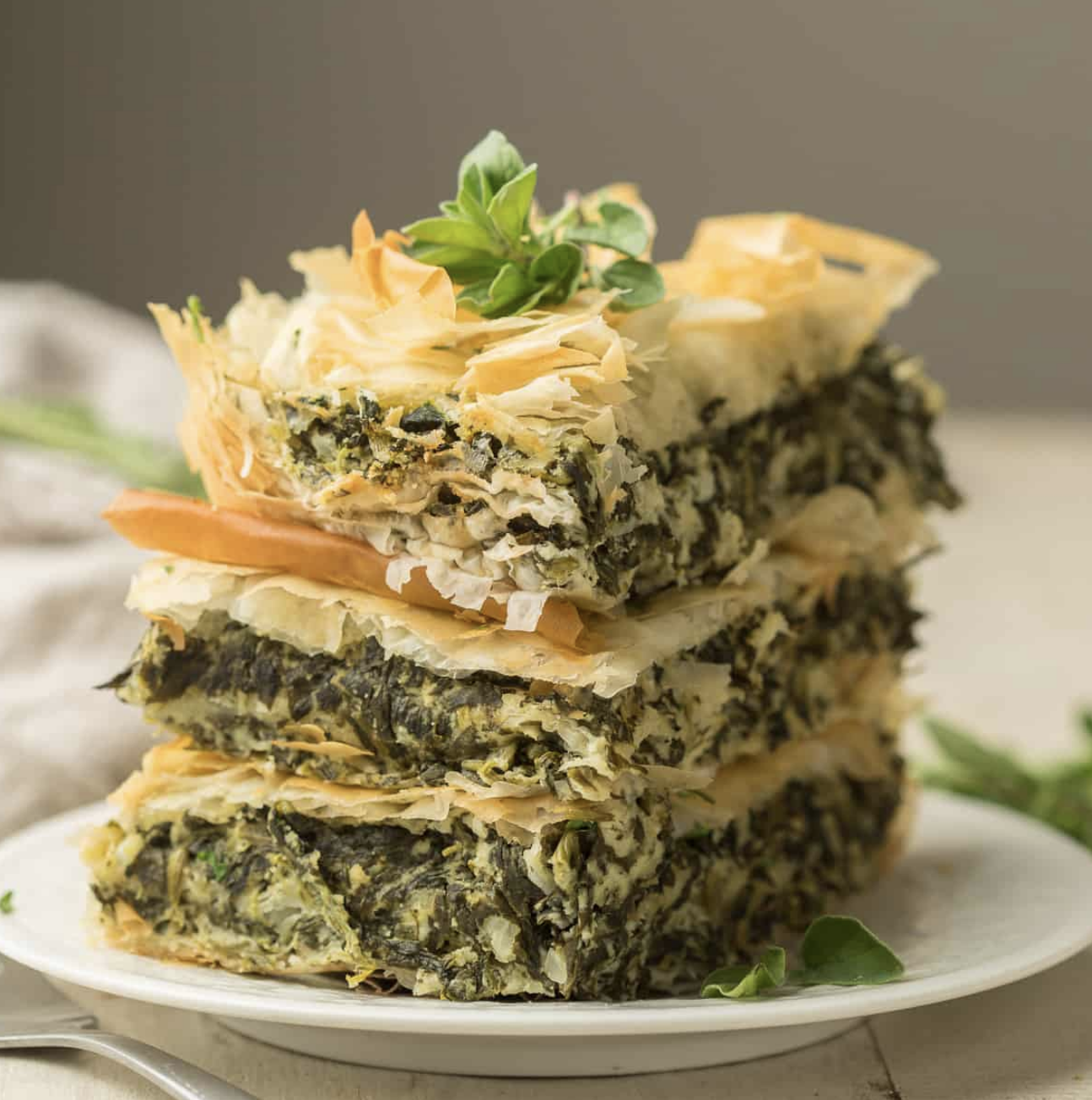
There are at least 6 people at this dinner (you plus the 5 invitees), you will definitely need 2, especially if anyone will want seconds... and you know at least 3 of the people at the dinner will want seconds. That's just anecdata, and one cannot argue with hard documented anecdata.
Question 12: Do you have any sayings/mantras/mottos/credos/affirmations that you consistently say to yourself?
You've convinced me to make 3 spanakopitas! Maybe 4. At some points economies of scale will surely kick in on the making of these things. Heck, maybe I'll start a catering business :).
I like this question!! I have a few:
- You decide (a comedian friend told me this -- before you go on stage you decide how the set is going to go, not the audience)
- You're only as good as you dare to be bad (Once on a flight I watched a random interview with Mindy Kaling where she shared this advice Robert Redford had given her)
- Age is something that doesn't matter unless you are a cheese (read this once in a book of quotes when I was little and I think about it constantly)
Those are all amazing. The one that sticks with me is from my ex-Mother-in-Law. Her's was/is "Don't let the fuckers get you down."
The "you are only as good as you dare to be bad" hits hard for those of us who are cripplingly afraid of failure.
Here we are at the triskaidekaphobic Question 13. Question 13: Do you have any superstitions or rituals in your life? For example: I had a very specific method of getting dressed and prepared for a soccer game. At the time it was for superstitious luck, but looking back on it, the process was a way to get my head in the right space to be fully present for the game. So, the "ritual" could be any type of mindfulness. Superstitions are what superstitions are.
I like the one from your ex MIL!!
And, yeah, I'm right there with you on fear of failure. How do we get past this?!?! Besides chanting these helpful mottos :).
And, haha this is very appropriate for Q13! The not at all fun answer is that I have OCD (the real kind, not the organize my spice rack kind, though my spice rack currently does look fantastic, mainly because I never cook, but I digress), so I have mountains of rituals that I wish I could get rid of, like various routines I have to follow of checking the locks in the house before I go to bed, and far more crazy things like tapping walls with my fourth (and only fourth!) finger. I basically have to do everything in fours. And if that's not possible, twos. Do not speak to me about odd numbers! haha (cry).
BUT something a little less clinical/disturbing might be ... before I give a presentation or send in a document for something, I have to run spell check on it twice. I feel like I'm convinced the first one won't catch everything. But, kind of like your soccer example, I think it's just a kind of mindset thing where I just need one more moment to see if things are as I want them to be before I get on stage or can't change it again. It literally does NOTHING to improve the document (and it's arguable whether spellcheck even run once does much of value), but if I don't do it twice ... who knows what I might have missed?!
I also every morning have a ritual of drinking a small cold brew coffee before I have what I consider to be "real" hot coffee. This began because I am so addicted to caffeine I needed something to drink WHILE making coffee. But now even if I'm super quick on the coffee, or my partner already got coffee for us, or whatever, it all still feels incomplete unless I start with my cold brew (this brand specifically, nothing else will do!).
Actual mental health stuff is rough. I had a coworker with diagnosed OCD. His manifested in checking the lights and some hand washing. I tire quickly of people who say they have OCD when they actually just like things to be in order. That coworker really opened my eyes to this.
Odd numbers are funnier, but I can see how they would be less calming. That being said, I cannot tell you how amazing it is that one of your rituals is to have coffee before you can have your coffee. That is next level caffeination. I am humbled in your jittery presence
Question 14: do you have any words of wisdom for Andrea Jones-Rooy of 5 years ago (aside from pandemic coping and survival... good lord that was 5 yrs ago)?
Oh lord! how was that so many years ago -- and then also thinking oh man I feel like I have one thousand things I'd say. I think a big one is: trust yourself to do what energizes you, rather than trying to engineer some kind of externally good-on-paper sort of life.
Time is very weird. The perception of time is an interesting thing. There is an eternity traversing from moment to moment, but long stretches of time are gone in a blink of an eye. I'm actually trying to write a bit of a story about it, but that is for another day.
Question 15: what is one thing you are looking forward to for the rest of 2026 that you didn't know you were looking forward to previously?
This is weirdly existential because it's so easy to feel hopeless and afraid about the world and life, but I would say I am looking forward to walking through the woods with my dogs. Is that the most boring answer possible? The more things fly out of control over here, the more I kind of just want to go on a long exploration in nature with my pups. Maybe thanks to your question I'll even make it happen.
It is definitely a weird and scary time to be alive. I think walking through the woods with beloved pets is never a boring answer. I think more people would do fun things with their pets. I think more people need more empathy in their lives. If I had to hazard a guess it is right around 50% of the US population might have some issues with empathy, but I am no longer a stats or demographer guy.
We have been all over the place with these 20 Questions, but I always like to cover my bases. Question 16: Is there a question you expected me to ask or one that you wished I had asked?
I am not a demographer either but I imagine you are completely correct about empathy. I think empathy and curiosity are probably the two skills/habits/outlooks that we need most, but I'm also not an expert on any of this. It just seems to me that everyone thinks they are right and anyone who disagrees is evil. Sigh. Yes to more fun things with pets for all of us!
I like the range of these questions! I think maybe one question I expected was what are my regrets or what do I wish I had done (or would do, now) differently. But that might be because my mind is dark, haha.
Well, far be it from me to not meet or exceed expectations, even though it is dark (for these are dark times)... Question 17: What do you wish you had done (or would do, now) differently (keeping in mind that you are the culmination of all your experiences and decisions, and your current self is truly enjoyable and a goddamn delight.)?
I wish I had much earlier embraced that I am someone who does several things reasonably well rather than one thing incredibly well. I wasted so much time arguing with myself about whether to go "all in" on art vs. science, when in fact it's possible, and ultimately (I think, I could be wrong) a greater strength that I can do both (though it would have been "easier" to pick one). In short -- I only wish I'd used all the energy I spent on trying to decide whether I was an artist or a scientist to actually just allow myself to be both and use that energy to put it into the multiple things I cared about rather than beat myself up for caring about multiple things. DOES THIS MAKE ANY SENSE.
It makes complete sense. I started out as a studio art major and shifted to dual majoring in art and math, and finally dropped the art to maintain a scholarship. There is an art to science and a science to art regardless of the flavor of science or the flavor of the art. I have found work as a translator of sorts for the extremely analytical to aesthetic.
First it was translating transportation planning/engineering into maps and graphics understandable by the general public as a cartographer, and now as a translator between user needs, business desires, and IT constraints as a UX designer.
The truly interesting part is the intersection of analytic and aesthetic.
Turn about is fair play... Question 18: Do you have any questions for me?
I love that you have woven in between both worlds, too! This is so interesting, and I would love to know more about your translating. Are the maps somewhere that I can admire them? And, remind me where you're doing UX design?
I guess this brings me directly to some questions for you!
1) Why are you doing this? (I mean this with curiosity, not accusation, haha.) Like, it seems like a lot of work, and I know you do it for many people. What are your goals with it? What gave you the idea? Where do you hope to go with it?
2) Any advice for how to politely follow up with people? You've been truly masterful at this. Never once have I received a followup and been like oh god this again (whereas I do get annoyed when other people send followups haha). You also time it so well it's like, just when I'm like ohhh, I need to reply to Scott, I get a fun and lovely note from you. My own instinct is to send one email, then if the person doesn't reply, to never contact them again. But if you had done that, we would have stalled at question 1. I really think you've handled this artfully and scientifically so would love to hear any advice you have :).
3) What's your favorite drawing/art you've ever created and why?
4) Seriously please tell me about the translations you've been doing!!!! What worked and didn't as cartographer, and what works and doesn't as UX designer? I might be obsessed with this now :).
I can honestly tell you, in all of my 20 Questions Tuesday Interviews, you are the only person who has taken on the offer of actually asking me multiple questions. I love answering questions. Truly, I love it. Let's do this.
1) Why are you doing this? (I mean this with curiosity, not accusation, haha.) Like, it seems like a lot of work, and I know you do it for many people.What gave you the idea?
I get asked this one a bunch. Honestly, I comb the Internet and other places to find people I find interesting. I then ask them if they would be willing to have a conversation. It truly is nothing more than that. I am curious about the people I enjoy listening to/hearing. People with a unique perspective or a different lens that they perceive the world through. It can definitely be a lot of work, which is honestly why I do it in this format, as an email back and forth exchange or a shared google doc. This way the person I am asking 20 questions can do it at their leisure and in their own time. Everyone is busy, sometimes it takes some time to go from question 1 to 20, but it was always bitesize.
a) What are your goals with it?
My goals are honestly to get to know the person with whom I am interviewing much better, to understand their thought process and perspective. That is it. I guess, a shadow reason for this depth of interaction is to potentially make an Internet friend as well. I feel like I could ask you for a recipe now, and you might be willing to share.
b) What gave you the idea?
The idea came from how the 20 Questions portion of the blog started because I used to crowdsource the 20 questions from my social graph. I would send an email out on mondays to a list of about 40 people and request them to send in 5 or so questions on a topic I would outline. If I was lucky, 4 or 5 of the people would email me back questions and I could cobble together 20 questions on. a topic and create a post. This, of course, was in the 00's when the internet was not nearly as cynical and blogging was in its heyday. I would then supplement these asks with asking specific people in my social graph if they would answer 20 questions themselves. A few decided to do it, and some of them decided to ask me 20 questions as well. That led me to asking interesting people on the internet if they would be willing to answer 20 questions. Most said yes. I interviewed comedians, artists, podcasters, random people I would chat with. It has been a delight.
c) Where do you hope to go with it?
I had hopes in the 00's that I would be the next Dooce or get a following like Scalzi's "Whatever." That ship was never a ship, and if it were a ship, it has passed. Now, truly I do this for the love of the game. I like getting to know people, even scammers who will eventually ask me to buy their crypto or invest through them into silver.
2) Any advice for how to politely follow up with people? You've been truly masterful at this. Never once have I received a followup and been like oh god this again (whereas I do get annoyed when other people send followups haha). You also time it so well it's like, just when I'm like ohhh, I need to reply to Scott, I get a fun and lovely note from you. My own instinct is to send one email, then if the person doesn't reply, to never contact them again. But if you had done that, we would have stalled at question 1. I really think you've handled this artfully and scientifically so would love to hear any advice you have :).
I think it is important to remember that I am asking you for a gigantic favor. This is not a trivial task, to answer 20 questions where some of the questions are actually existential in manner and not just a simple "yes/no." I owe you for your time and effort. You owe me nothing. If you had, at any point, said that you wanted to be finished, I would have easily and quickly exited the conversation and thanked you for your time. There have been major life events that have happened for people I was asking 20 Questions. While asking the 20 questions to a guy who is "known" for Star Wars cosplay, his wife and he welcomed a baby into the world. His ability to commit to the interview was seriously compromised, so it sat for a while until he could go back to it. While asking 20 Questions to a very popular Australian comedian, some family tragedy took place and we paused for about 6 months. His responses were much more emotional and poignant for the last half. It was terrible and beautiful. An actor/voice actor I was interviewing had to stop mid interview due to a new project she booked. Y'all are all doing me a solid. Any interaction I get from anyone on this blog is a gift and I treat it as such. This email conversation is your gift to me. I am very grateful for your gift.
As far as my methodology for reaching back out... I always have to remember that I don't know what is happening on that side of the screen. Major life events could be happening, and my request for questions really amounts to very little in their worlds. If my world depends more on a person's response, I will definitely be more direct and less politic in my message. Be glad you were never a contractor who missed an appointment with me, but the gist of it is, the person you are interacting with has a different set of priorities than you do.
3) What's your favorite drawing/art you've ever created and why?
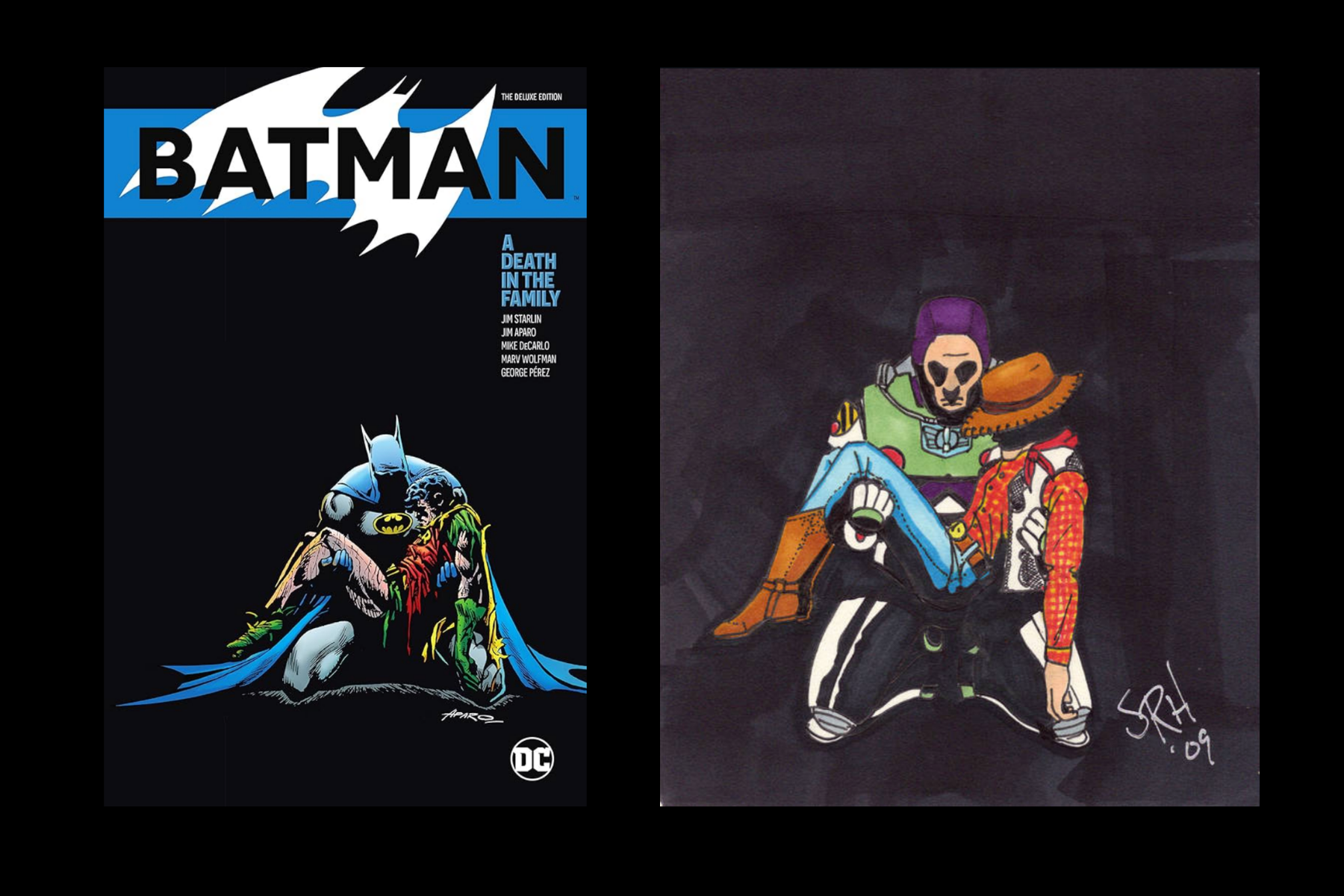
Toss up between a parody of the Jim Aparo Batman Death in the family cover where I switched Batman and Robin with Buzz and Woody respectively, and Capt Bara... that one just makes me laugh. 17 years between them...
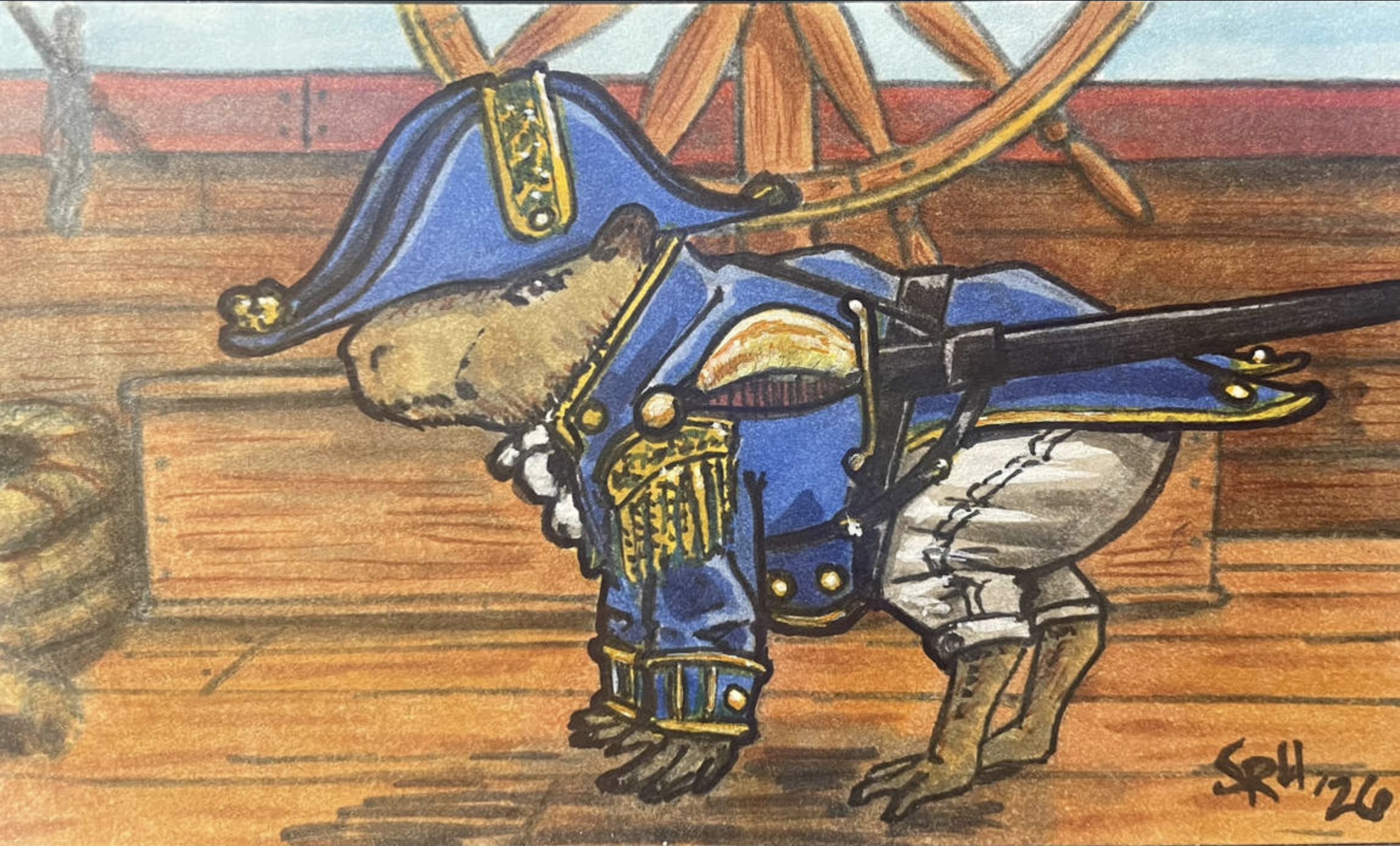
4)Seriously, please tell me about the translations you've been doing!!!! What worked and didn't as cartographer, and what works and doesn't as UX designer? I might be obsessed with this now :).
Oh, this is definitely a longer conversation. Honestly, I think talking to you about this will be fun, but there is a lot to it. I do also welcome this conversation at your leisure. We are getting into the art of science and the science of art with this one. Both cartography and UX are fundamentally data integration and story synthesization. You take information from different sources and have to weave that data into a single cohesive story... a tapestry, if you will.
Quickly though, in a rough analogy, for science to art it is the ability to see the forest through the trees. It is about simplification and generalization and aggregation of information. What is the extraneous detail that is necessary to define something, but is not necessary to show anyone. Conversely, for art to science it is the ability to recognize structures inherently associated within the art and exploiting that as a definition. Is there an underlying inherent structure to how the art is constructed? Think golden ratio, fibonacci sequence, rule of thirds, color theory, etc... Most of these structured mathematical aesthetics are derived from art and not specifically inserted into it at the beginning. If the art does not match these concepts. It feels "off" and is less pleasing. I remember when someone showed me 3-point perspective for the first time as an actual exercise and realized I had been doing that (not as precisely as using tools for it) inherently because that is how the drawing looks better. Now I just don't draw expansive backgrounds, because to hell with that noise.
Question 19: What are you taking from these 20 Questions that you did not bring in with you?
I am taking in absolute respect for you for your persistence in dealing with me. And a deep reflection for myself on how when someone emails me with something substantive and interesting and thought-provoking, I tend to procrastinate on it so much harder than when someone sends me an email I genuinely do not care about. I am SO fast at replying to people who don't matter to me about things I don't care about. And then when there's actually something that generates (gasp) *emotions* in me (like your beautiful artwork you shared with me especially, and also really anytime you say something nice to me or that makes me feel some kind of feeling!!) -- I shut down and am like I CANNOT DEAL WITH THIS IT IS ALL TOO HUMAN AND NICE. And I go back to clicking "yes" on calendar invitations to zoom meetings I don't want to attend. So I think the big thing is, like ... why do I avoid the things that actually mean something to me? What is so scary or hard about that? And why am I so quick to distract myself with things that don't matter?
And also to reiterate I have AMAZING respect for your persistence and patience. I am going to do my best to channel this in my own life ... I am SO quick to give up on things and people. And I so am impressed by your tenacity and also genuine kindness through which you've approached my rudeness.
I think you may not realize how much of a gift you have given me. This has absolutely been one of my favorite 20 Questions interviews I have ever done. It strikes the correct balance between introspection and explanation. It is very personal while also really impersonal about how data works (and doesn't). I have enjoyed myself greatly throughout these 20 Questions.
So... here we are.
Question 20: What's next? Be as concrete or philosophical, as near-term or long-term, as metaphorical or literal as you want.
I will tell you what, partly because of this interview and the reflection you've invited me to do, plus your encouraging and supportive words, and plus being genuinely sick to death of continuing to work on OTHER people's projects rather than prioritize the creative and science communication work I want to do more of, as of Aug. 18 (my birthday yay) I have launched a "year of action" for myself where every day I make sure to spend time/energy on a creative project I want to move forward. So, you can expect to see more from me soon in terms of reviving my data podcast (now with video!), hopefully getting my book going somewhere (ok you probably won't see anything concrete about that soon), posting other social media & YT type stuff, and (you're hearing about this before anyone!) debuting my solo show in November at a theater called Caveat in NYC! If you're in the area, you've got a comp ticket standing by with your name on it!
That's a pretty literal answer but honestly it reflects a deeper shift I've been experiencing throughout the time we've been corresponding -- I genuinely am feeling more and more like life is fleeting and I've been saying things for YEARS, nay, DECADES about things I want to do and then just going back to my usual life of helping other people with their projects and dreams. Make no mistake, I've gotten to work on some cool stuff, but I feel increasingly like ... what if I put that energy into my own work, instead? So, thank you for helping me come to this realization/shift. And also it's all your fault if I fail spectacularly (this is a hilarious joke). :).
I do not think you will fail at all. If you need outside of your daily life counsel, do not hesitate to ask. Again… I love answering questions. I cannot wait to see what you do. This was one of the deepest and most engaging 20 Questions I have ever done. You are worth the persistence.
So, everyone check out Andrea’s website, listen to her podcast: Behind the Data and her other podcast: Political Reality, follow her Instagram… She truly is great.
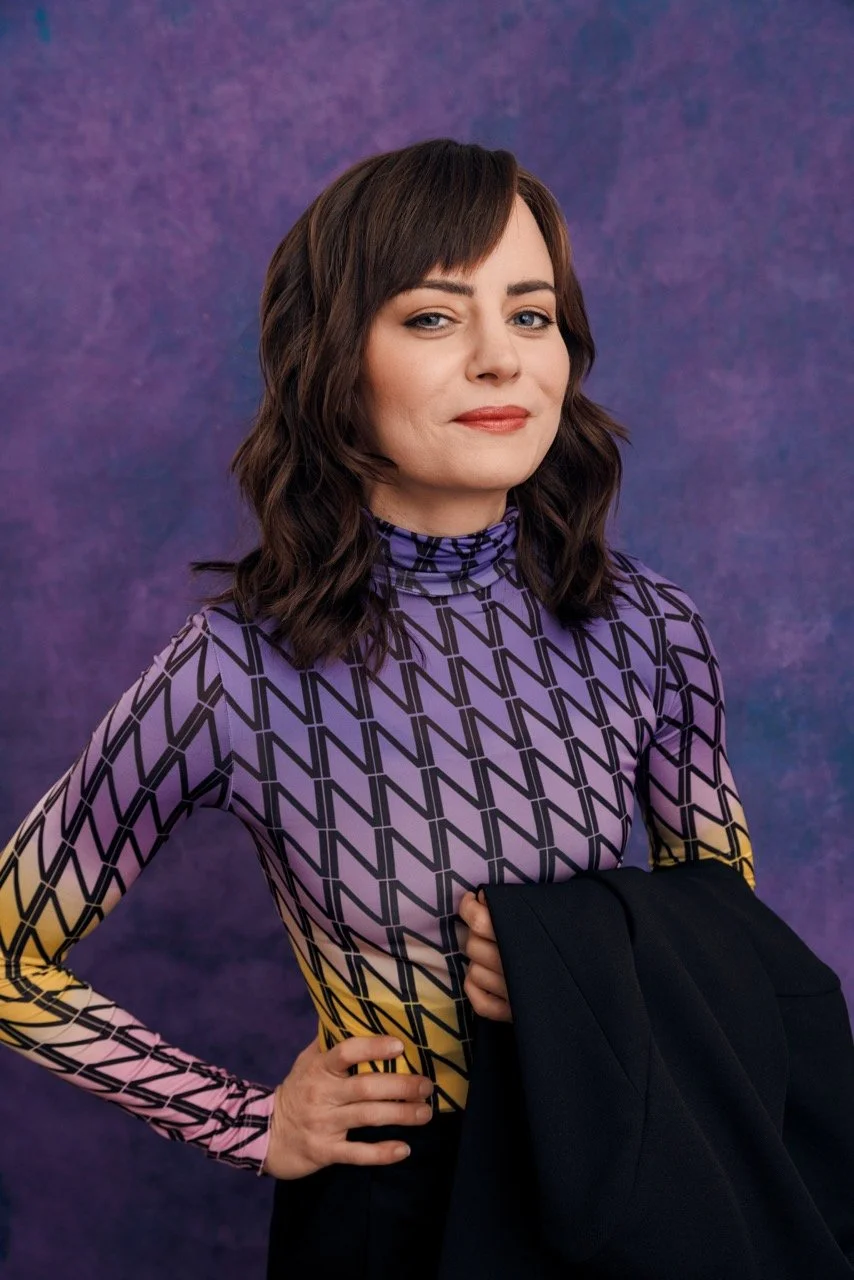
To recap:
This was fun and deep and lovely
Tell awesome people they are awesome
Do it early and often
Even if you do not really know them
Tell them they are awesome
Tell the people you love that you love them
Especially people who are not technically family
Tell your friends and colleagues you love them (if and only if you do)
This time in the world needs more conspicuous love in it
People need to know they are loved
People need to know when they are awesomeDon’t hold back
Say, “You are awesome and I love you.”
The worst thing you will have to do is have to let them know “not in THAT way, silly”
If you don’t love the people who are around you
Try to find more people in your life so you can find people you love
If you don’t love the people who are around you
Tell them things that you do love about them
Okay, off the love soapbox
Youngest is in college now
How did that happenI need to draw more
I need to write more
I need to sleep more
I need to love myself more
Not that way, gutter dwellers
I have side job idea on the side-burner
More details to come
I think this one will be a good one
I will let all y’all know as things connect
Do the thing with Substack
Do the thing with Medium
Have a great week
I love most of you
I love things about all of you